Showing posts with label Travel. Show all posts
Bite Club: in search of South Africa's other Big Five

Bite Club: in search of South Africa's other Big Five

It’s the smell that hits us first as we approach downwind of the offshore rocks: an acrid, noxious, inescapable stench. Undeterred, our boat ventures forward, following a frothy slick being borne from the rocks by the current. As we get closer, a raucous cacophony of braying, barking and bleats comes into earshot. It’s a seal colony – our first brush with wildlife on this alternative “Big Five” safari.
Much of Africa’s tourism is driven by its wildlife, and safaris offering sightings of the so-called Big Five are the most in-demand of all. But while lions, rhinos, elephants, leopards and buffalo can be found in many spots in South Africa, I’ve come to Cape Town with a different agenda. Rather than heading inland to the bush, this safari experience is out in False Bay, where we’ve come to seek out Africa’s top marine predators – penguins, dolphins, seals, whales and great white sharks.
In terms of ocean wildlife, False Bay is hard to beat. Its 420 square miles of water is framed by soaring topography, with the Hottentots Holland Mountains on one side and a finger of land reaching down to Cape Point on the other. Cape Point is where the correspondingly cold and warm waters of the Atlantic and Indian Oceans meet, creating conditions where sea life flourishes.
d17e8445.jpg
Seal Island (Chris Fallows/apexpredators.com)
The abundance of fish draws predators in many shapes and sizes, and here at appropriately named Seal Island, I’m eyeballing one of one of the most common. Our boat slows to a crawl as it nears the rocks, where 65,000 Cape fur seals are busily rearing their young. It’s a riot of adult males sparring for dominance while hungry pups call for their mothers. Their combined, fishy excrement is the source of that pungent slick. 
It’s June, the start of Cape Town’s winter, which may seem an odd time to visit. Somewhere behind us, thick cloud shields Table Mountain from view. Only occasional shafts of sunlight pierce through from the heavens, and we’re wearing layers to withstand the chill on the breeze. But while this may be slow season for tourists, it’s the best time to see False Bay’s predators. At this time of year, there are whales in good numbers, African penguins are courting, and the half-grown seal pups that we’re cooing over are learning how to swim. For some, the adventure will be brief. We’re not the only visitors to Seal Island. 
Great white sharks have also followed the slick and Seal Island is basically a big, open buffet; few other sites hold such promise of spotting these mighty predators. Chris, our guide, explains how the stretch of deep water on this side of the island is the most dangerous place in the world to be a seal. It’s what he calls the “strike zone”; if you’ve ever seen TV footage of great white sharks breaching, leaping clear of the water in pursuit of a seal, it was probably filmed right here. 
d17e9550.jpg
A pod of dolphins in the Bay (Chris Fallows/apexpredators.com)
Many shark-watching trips “chum” the water to tempt the animals closer, but the seals’ rancid slick performs the same function. Now it’s just a waiting game. As we scan the water for activity, Chris explains how False Bay’s great whites are the largest in South Africa, and tells tales of various hunting behaviours he’s witnessed at this spot. It’s an ominous thought, especially given our boat’s tiny stature; and it certainly adds to the frisson of anticipation. 
But today, perhaps the sharks aren’t hungry. The seals seem relaxed as they play in the swell, suggesting their predators are elsewhere. After a while, Chris cuts our losses and steers away from the rocks towards open sea. 
As we skim across the bay, sunshine finally breaks through the clouds. As if to welcome it, a pod of common dolphins, at least 100 strong, appears out of nowhere and races the boat, taking turns to ride the bow wave. They leap and back-flip obligingly as they go, some almost within touching distance. We travel with them for several minutes, mesmerised by their antics. But as they begin to outpace us, Chris brings the boat to a stop, his keen eyes already locked on another species. 
_29a8804.jpg
A whale's tail fin (Chris Fallows/apexpredators.com)
He points to where a huge, dark body is breaking the surface, quickly followed by another. Our luck is in – it is a Southern right whale mother and calf. They sink out of sight, but the strokes of their tails leave telltale, circular “footprints” on the water as they pass under the boat. 
The population of right whales – they were once considered the “right” species to hunt – was decimated in years gone by. But legal protection has seen them rebound, and they’re frequently seen here in winter. In fact, we spy more later, swimming close to the shore at Boulders Beach, which is where we head after the tour for close-ups with the last of False Bay’s Big Five. 
Boulders Beach is named for its striking jumble of weathered rocks, among which lives a colony of penguins. In summer, this is a tourist hotspot, but today we are almost alone. We follow a boardwalk to where groups of the birds are gathered on the sand, immaculate in their black and white plumage like gentlemen dressed for a ball. 
We survey their waddling until our eyes are dragged seawards as another whale passes close inshore. Somewhere out there, too, sharks are lurking in the depths; and although it’s a shame to have missed them today, we’re certainly not disappointed. Four of the Big Five is pretty good going – and we now have a reason to come back next winter. 

Travel essentials

The writer travelled with British Airways (0344 493 0787;ba.com), which flies daily from Heathrow to Cape Town. 
Kenwood Travel (0207 749 9242; kenwoodtravel.co.uk) offers packages to South Africa: BA flights with five nights’ B&B at Belmond Mount Nelson cost from £1,299pp. 
A half-day False Bay safari costs from £95pp with Apex Predators (00 27 21 788 1863; apexpredators.com)
Cape Town Tourism: capetown.travel
Travel guide to... Cornwall

Travel guide to... Cornwall


A swan glided past as I paddled up Frenchman’s Creek. In the gently rippling water, its bright white reflection heightened the serene beauty of the little channel, which is so thickly bordered by gnarled and ancient woodland it looks as if it might have strayed out of a fairy tale. The peace was palpable, in striking contrast to the blustery waters of the Helford Estuary we had just crossed. 
I was on a guided kayaking trip with adventure company Koru Kayaking (korukayaking.co.uk; two-hour guided tours £40 per person), learning not only how to paddle properly but also about the wildlife and history of this part of Cornwall – and its secret places, too. Frenchman’s Creek was, of course, the inspiration for Daphne du Maurier’s hugely romantic novel of the same name; it’s a magical, hidden little stretch of water (in reality du Maurier’s galleon would never have squeezed in here) and you need insider knowledge to find and enjoy it.
And that’s the thing about picturesque Cornwall: it offers myriad offbeat places where you can get completely away from the crowds - despite the region’s popularity. The county’s appeal is, of course, many and varied. Head to the north coast for the biggest beaches, the coolest surfing culture and the most acclaimed restaurants; go inland for wild moors and bucolic farms; the west has a vibrant arts scene – along with spectacular, remote cliff scenery and some of the most intriguing remains of Cornwall’s industrial heritage; the Helford River area is quite jaw-droppingly lovely; and the south coast is dotted with hidden coves and punctuated by buzzing Falmouth and gorgeous little Fowey. 
shutterstock_330699884.jpg
The village of Gweek on the Helford River (Shutterstock)
Diverse, yes, but there’s a common theme to the landscapes of Cornwall: the wonderful, fuschia-lined lanes that you travel down to find hidden beaches (Chapel Porth on the north coast; Porthgwarra on the south) or far-flung sites (Levant mine on the south coast; Godrevy cliffs and lighthouse in the extreme west).
On the water
Cornwall is synonymous with surfing, and the north of the county attracts wave-hunters from across the UK and beyond. Among the hotspots are Widemouth Bay, Polzeath (a favourite of the Camerons), Mawgan Porth, Perranporth, and the pretty little town of St Agnes, in the next cove. To the west, Newquay is ideal for beginners, and has plenty of surf schools to choose from; Cornwall Surf Academy (cornwallsurfacademy.com) offers half-day lessons from £25 per person, including equipment hire.
The south coast, meanwhile, is the place for yachting. Learn to sail or hone your maritime skills in Falmouth with Falmouth School of Sailing (falmouth-school-of-sailing.co.uk). Half-day taster sails from £55 per person.
1.jpg
Falmouth School of Sailing offers taster sessions
For more watery activity head to St Mawes, where you can charter a traditional fishing boat, the Madeleine Rose, and take mackerel catching trips or make a leisurely putter up the River Fal (fishandtripstmawes.co.uk; £120 for a half day for up to seven people).
Further east along the coast, Fowey is full of retro charm, not least with the Fowey Picnic Boat (foweypicnicboat.co.uk), a wonderful, 1930s wooden launch that you hire complete with skipper for gentle excursions on the River Fowey or intriguing explorations up some of the area’s hidden creeks. A two-hour cruise costs £120 for up to six.
Dine out
The county offers a veritable feast of gourmet options, from Nathan Outlaw in Port Isaac (nathan-outlaw.com) to Jamie Oliver’s 15 at Watergate Bay (fifteencornwall.co.uk). Not forgetting, of course, Rick Stein (rickstein.com) and Paul Ainsworth (paul-ainsworth.co.uk) at Padstow. The latter’s six-suite Padstow Townhouse reopened in December after a major makeover; doubles start at £280 B&B, with dinner-inclusive packages also available.
padstow-townhouse-hotel129-968x570.jpg
Bath-time at the Padstow Townhouse
Yet, Penzance is starting to vie with Padstow as a gourmet centre, thanks to three seriously good foodie venues. The Coldstreamer pub (coldstreamer-penzance.co.uk) at Gulval offers beautifully devised Cornish dishes in a great setting; Bruce Rennie’s The Shore (theshorerestaurant.uk) is a small outfit with fabulous cuisine that glories in local produce; and the Tolcarne Inn (tolcarneinn.co.uk) in Newlyn, on the edge of Penzance, has been making waves since Ben Tunnicliffe took over in 2012.
Arts and crafts 
Don’t miss Penzance’s Penlee House gallery and museum (penleehouse.org.uk; £4.50). Set within a converted Victorian house, the museum’s collections span thousands of years of west Cornwall history. The current exhibition (to 11 June) is Fred Hall: from Newlyn School to Caricature, focusing on on the artist’s diverse range of landscapes and caricatures.
barbara-hepworth-two-forms-_0.jpg
The Barbara Hepworth Museum
Although that the Tate St Ives is closed for refurbishment until April 2017, the nearby Barbara Hepworth museum and sculpture garden, also run by Tate (tate.org.uk; admission £6), is still open, housed in the artist’s former home, studio and grounds.
Scene stealers
In south-west Cornwall, Helford River Cruises has already spotted several dolphins on its excursions this year. Apart from these possible wildlife sightings, the company’s spectacular trips in a Cornish fishing boat take in sublime scenery of little creeks as well as the Helford River itself (helfordrivercruises.co.uk; £20 per person). 
The trip passes amazing Trebah (trebahgarden.co.uk; £9.90), which you’ll probably want to come back to explore – it’s a subtropical utopia of palm trees, acers, giant ferns and more.
Alternatively, take in the wonders of Glendurgan Garden (nationaltrust.org.uk/glendurgan-garden; £9) by the Helford River, with its maze, its carpets of wild flowers and its impressive tree collection.
heligan_rope_bridge.jpg
A rope bridge at Heligan
For more of the county’s horticultural best, visit the beautiful Lost Gardens of Heligan (heligan.com; £13.50) close to St Austell, currently celebrating Heligan Wild Week (to 5 June) with family-friendly activities. Or explore the exotic plants in the biomes of the nearby Eden Project (edenproject.com; from £22.50).
On foot and hoof
So often bypassed in the rush to the coast, Bodmin Moor is a brooding landscape of granite tors and sweeping uplands that are rich in standing stones and Bronze Age remains. Here Hallagenna Riding (hallagenna.co.uk) offers guided riding and walking breaks with accommodation in a converted stable block; three-day riding holidays start at £200 per person, seven-night walking holidays from £505.
The Southwest Coast Path (southwestcoastpath.org.uk) skirts around Cornwall’s coastline, attracting long-distance hikers as well as day-walkers. The stretch around the Lizard peninsula takes you through some of the county’s most picturesque scenery, and to mainland Britain’s most southerly point; set off on the well-marked trail from pretty Mullion Cove.
shutterstock_123366361.jpg
Mullion Cove (Shutterstock)
Travel essentials
Getting there
Newquay airport is served from across the UK by Flybe (flybe.com), which is adding to its routes this year with flights from Liverpool, Glasgow, Doncaster and Aberdeen. 
You can also catch the Night Riviera Sleeper (gwr.com) from London Paddington to Penzance, waking up in Cornwall as the train passes through spectacular scenery. 
Getting around
The most convenient way of getting around Cornwall is by car, but the roads can get clogged with traffic in summer. Public transport offers some great options for admiring the scenery: hop on the St Mawes-Falmouth ferry (falriver.co.uk) for a picturesque 20-minute ride across the River Fal; take the Fowey-Mevagissey ferry (mevagissey-ferries.co.uk) and you may see dolphins on the 35-minute journey. Or enjoy one of the most beautiful train routes in the country, the St Ives Bay line from St Erth (greatscenicrailways.co.uk). 

Cool Place of the Day: Mount Haven Hotel & Restaurant, Cornwall

Cool Place of the Day: Mount Haven Hotel & Restaurant, Cornwall


Tucked just beyond the narrow lanes of Marazion, and blessed with fantastic views of Mounts Bay and St Michael’s Mount, the Mount Haven is a smart yet unpretentious hotel and restaurant for all occasions, from a romantic holiday to a pit stop along the South West Coast Path.
It’s run with dedication and passion by the owners, Mike and Orange Trevillion, and the feel of the place and the service is something special: if you want a swanky hotel close to Penzance and the wild, western tip of Cornwall, bag a four-poster suite or boutique balcony room here with all the trimmings you’d expect of top-notch accommodation and you will be very happy indeed. Local artwork adorns the walls and sculptures dot the hallways and living spaces, but every area from the lounge and terrace to the restaurant beckons you to relax and enjoy the sea views.
There’s a spa offering holistic treatments and all sorts of rejuvenating pampering, and it has a pretty decent restaurant too – popular with non-residents, and serving refined yet simple food based on local, often foraged produce. Whether you want a Cornish crab sandwich after a dog-walk on the beach, morning coffee with a view, or a three-course gourmet dinner, it’s one of the best dining venues around; and this, surely, is one of the best places to stay – in a part of Britain where there’s no shortage of good competition.
Cool Places is a new website from the creators of Rough Guides and Cool Camping, suggesting the best places to stay, eat, drink and shop in Britain (coolplaces.co.uk)
Simon Calder: Could this be Britain's most expensive airport link?

Simon Calder: Could this be Britain's most expensive airport link?


Outrage: that has been a typical response to the Heathrow Express raising “walk-up” rush-hour fares by 9 per cent. From Monday, the fast train between London Paddington and Europe’s busiest airport will cost £24 one way during the morning rush hour. That’s two pounds more than the current fare, which itself increased earlier this year as part of the normal January “trainflation”. The new fare works out at £1.63 a mile. But that’s not an outrage.
Anyone who chooses Britain’s priciest train may be in a tearing hurry, or on expenses, or happy to pay a premium price to get their trip off to a flying start. Or all three. Alternatively, they may be travelling with under-16s, who go free on the Heathrow Express.
The train operator can hardly be accused of exploiting a monopoly. Travellers enjoy an abundance of choice of cheaper, slower alternatives between central London and the airport. For £10.20 you can take the Heathrow Connect from Paddington, the slower sibling of the airport’s Express rail link. For a maximum of £6, the Piccadilly Line will get you to the airport eventually. Or get up early and pay just £1.50 for the long and winding N9 night bus from central London.
The British traveller is accustomed to trading time for money. For example, the UK’s most expensive long-distance train ticket (95p per mile from Watford Junction to Rugby on Virgin Trains) has a ready rail alternative in the shape of London Midland, charging barely half the price in exchange for a half-hour longer trip.
Yet there is one airport link for which I can find no cheaper option save walking or hitch-hiking. As far as I can tell it is also Britain’s most expensive bus ride, both per minute and per mile.
The trip from Bournemouth railway station to the town’s airport takes 12 minutes to cover four miles. All yours for £5.70.
With each mile costing £1.42, the Bournemouth bus is Heathrovian in its pricing. It works out more than twice as expensive as the fare per mile charged by British Airways for a one-way Club World flight from Heathrow to Singapore. And unlike BA’s business-class cabin, the Bournemouth bus I caught last weekend lacked lie-flat beds and smiling cabin crew dispensing champagne.
I was flying from the Dorset airport because it offered the cheapest journey from London to Barcelona. The traditional half-term price surge meant the cheapest fare to the Catalan capital from any of the airports serving the English capital was upwards of £150. A quick scan of alternatives revealed a deal at half the price (£78), flying from Bournemouth to Girona with Ryanair.
Even by the Irish airline’s imaginative view of European geography, that could hardly be described as a London-Barcelona journey. But including an Advance train ticket from Waterloo to Bournemouth and the onward coach from Girona airport to Barcelona, I priced the trip at a flat £100 – plus, I guessed, a couple of pounds for the brief bus ride from Bournemouth’s station to the airport. 
Yet when I offered a fiver to the Bournemouth bus driver, he politely demanded more.
Most airports have a low-cost means of access for people prepared to trade time and effort for saving cash. In Edinburgh, for example, getting off the tram at the last-but-one stop rather than the airport itself cuts the £5 fare to just £1.50 in exchange for a 15-minute walk.
Bournemouth’s airport and bus operator are free to charge whatever they wish. But if the Dorset airport wants to carve out a slice of the world’s biggest and richest aviation market – south-east England – it might enhance its low-cost credentials with a cheaper means of access. Meanwhile, I look forward to your nominations for an even pricier British bus journey.

Where's hot in June? Holidays to take now and plan ahead

Where's hot in June? Holidays to take now and plan ahead

Ischia


With Turkey, Egypt and Tunisia crossed off many holidaymakers’ lists, bookings to Spain have leapt by nearly 40 per cent over last summer’s figures. That’s in spite of a tourism tax that will be imposed on visitors to the Balearic islands from 1 July. But although travel agents warn of a European holiday shortage this summer, there are still some prime choices available in June.

Go now

Italy
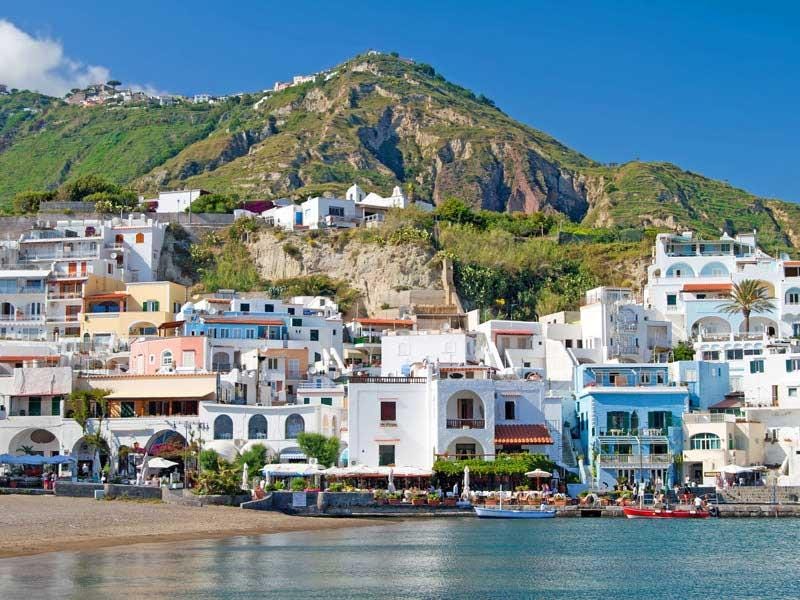
Perennially popular Italy hasn’t been slacking either, thanks to a winning combination of top-class cities – Rome, Venice, Florence – and its sublime landscapes ranging from alpine lakes to volcanic Sicily. As bookings to the Amalfi Coast have shot up by 30 per cent from last summer and accommodation is being snapped up quickly, consider a more tranquil break on the nearby island of Ischia. ExperttoItaly (expertoitaly.com; 020-7520 3100) offers a week’s half-board at the Garden Villas Resort near the village of Lacco Ameno, with the beach at San Montano and the Negombo thermal spa a short walk away. Prices start at £750pp throughout June and including transfers but not flights to Naples.
Sardinia's Costa Verde
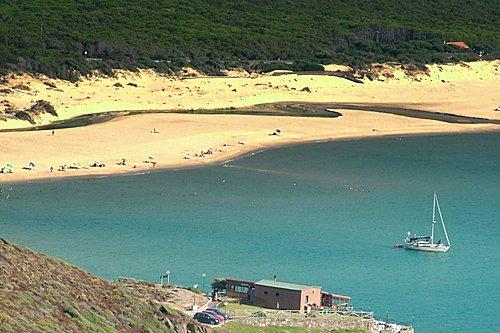
Inntravel (inntravel.co.uk; 01653 617001) has a self-guided walking holiday in Sardinia, for which demand is surging. A seven-night walking holiday on the south-western Costa Verde, which includes the Unesco-listed Piscinas sand dunes, costs from £775pp until 12 June, including half-board and luggage transfers. Flights are extra.
Portugal
Vintage Travel (vintagetravel.co.uk; 01954 261431) is reporting a surge in bookings to the Algarve of 30 per cent since last summer, but there’s still an opportunity to bag a holiday at its new addition, Casinha Goa. This two-bedroom villa is in the fishing village of Ferragudo on the banks of the River Arade, with the beach of Praia Angrinha just a short walk away. The villa features a roof terrace with a plunge pool, and costs from £795 for a week starting 4 June.
Mauritius
While European football fans will be gripped by Euro 2016, Mauritius will be hosting the World Club 10s Rugby tournament on 18-19 June featuring teams including Saracens and Toulon. Co-host Beachcomber (beachcombertours.co.uk; 01483 367946) offers seven nights’ half-board at Le Mauricia Hotel from £1,080pp departing 14 June, including flights, transfers and rugby tickets

Book now

Mountain air
The usually hedonistic ski resort of St Anton in Austria will have a more zen-like air when it hosts the outdoor Mountain Yoga Festival from 1-4 September. Inghams (inghams.co.uk; 01483 371217) has a week’s half-board here at the Hotel Alte Post from £838pp, including flights and transfers, departing 31 August.
733c2e7eb66b43cf4bc594f893c61bae_l.jpg
St Anton Mountain Yoga Festival
Autumn colours 
Don’t follow the crowds to New England to see the autumn colours in all their glory. Instead, head north of the border to Canada and quieter Quebec, where the display is just as vivid. Wexas Travel (wexas.com; 020-7590 0635) offers a 10-day self-drive tour taking in Montreal, the Laurentian mountains, Sacacomie Lake and Quebec City. Costing from £1,975pp and based on departure dates from 15 September to 21 October, it includes flights, accommodation, city tours and car hire.
Low season delights
September is one of the mellowest times to visit Greece, with warm temperatures and few crowds. Combine beaches and mountains in lushly forested Thassos, the most northerly of the Greek islands. A week’s self-catering in the Mikro Kazaviti apartments in the pretty village of Kazaviti with Sunvil (sunvil.co.uk; 020-8568 4499) costs from £752pp, including flights, transfers and car hire, departing 16 September.

St Eustatius: treasure hunting in the Caribbean

St Eustatius: treasure hunting in the Caribbean

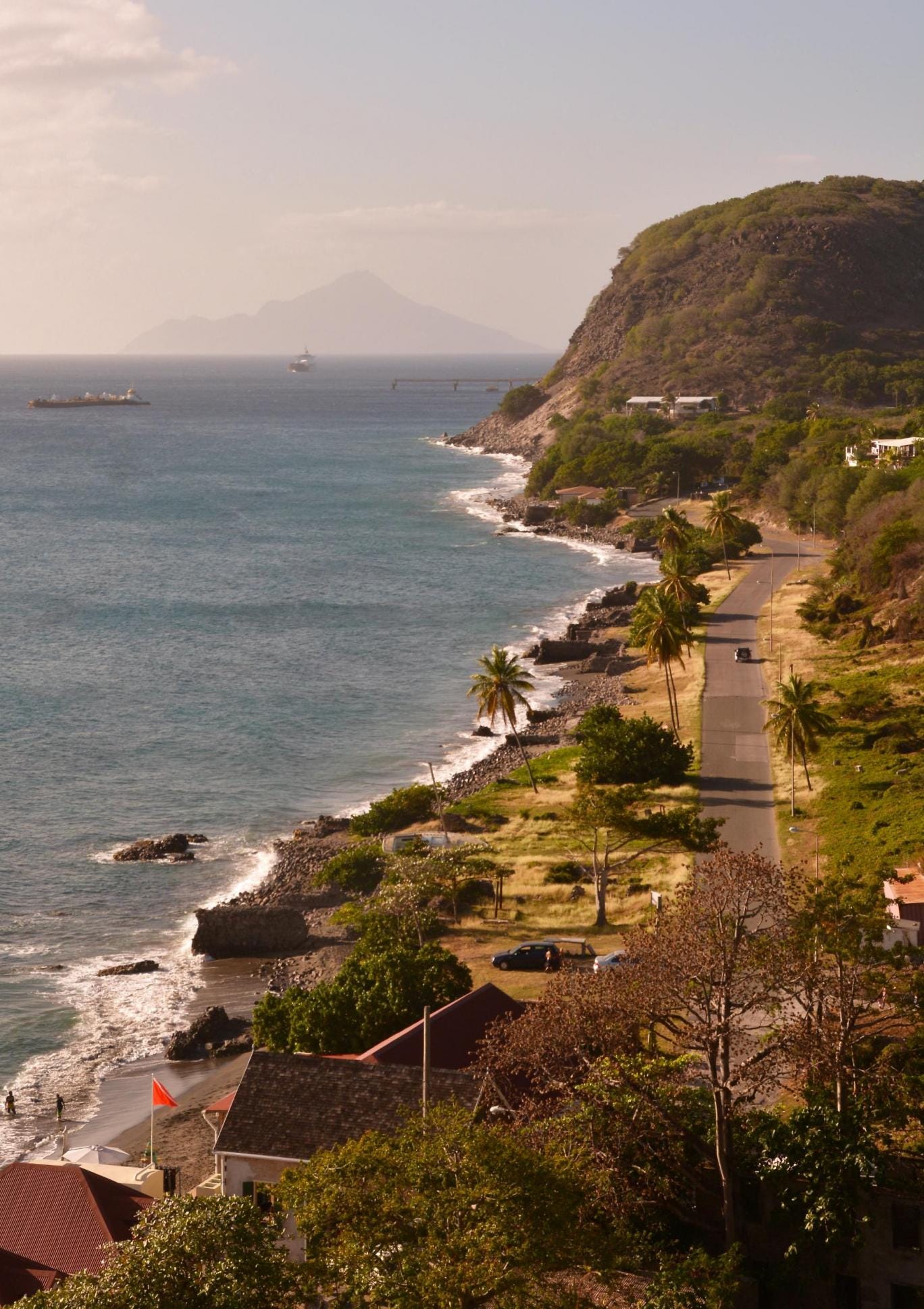
Statia's coastal road Amy Dean

Around mid-point along the volcanic arc of Caribbean islands that stretches from Florida to Venezuela, lies the largely forgotten nation of Sint Eustatius. Today it is overshadowed by neighbouring St Kitts, Antigua and the Virgin Islands, but this tiny island of just over 8.1 square miles once played a disproportionately large role in the fate of both Europe and the newborn United States of America.
While many people are unfamiliar with Sint Eustatius, a special municipality of the Netherlands more commonly known as Statia, those who have heard of it tell me, “there’s nothing to do there. It’s small – you’ll get bored within a day.” I take this as a challenge.
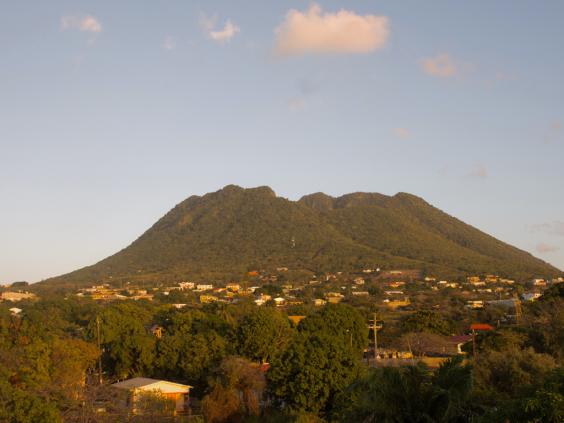
Its riches are first suggested to me while I’m pulling on my hiking shoes to climb the Quill, Statia’s dormant volcano that dominates the island’s skyline. “There’s treasure in the crater, you know,” says my host Win Piechutzski. “What kind?” I ask. “Valuables the Dutch landowners hid in caves when they knew the English were coming.” He replies with just a hint of a glare.
Statia certainly carries great promise of treasure through its history of wealth and conflict. With little rain or land to support plantations, it became a trading post for goods, raw materials and slaves between the Americas, Africa and Europe in the late 17th century and was at one time the world’s busiest seaport. The island became phenomenally wealthy and European nations, principally the Dutch, British and French, vied regularly for control of it. It has changed hands 22 times throughout its history.
My initial ascent of the Quill is through rather uninspiring scrub and dry woodland. Statia’s population boom to over 12,000 people at the height of its wealth in the 18th and early 19th centuries (it is now just over 3,000) forced landowners to clear far up the slopes, destroying the biodiversity. But when I reach the rim and look down into the crater, it’s a dramatically different landscape; the interior is swathed in dense forest.
After scrambling down the steep path to the bottom of the crater a broad path appears, leading me past giant ficus trees that spread their tentacle-like roots across the forest floor. Their leaves create a high canopy that, with the stillness of the air, creates a church-like feel. I follow the path around the inside of the crater, lit by an ethereal green light as the tropical midday sun filters through the leaves. To either side of the path is impenetrable undergrowth – it’s no wonder the treasure remains hidden.
That afternoon I explore Statia’s only town and capital, Oranjestad, in the company of the island’s director of monuments, Walter Hellebrand. Our first stop is Fort Oranje, where he tells me Statia’s best-known story. In 1774 the British had become increasingly annoyed with Statia’s role in supplying the restive states in North America with munitions. They encouraged the Dutch West Indies Company to ban the trade, which they duly did. Statia, however, ignored them.
Fort Oranje was the first to recognise a United States vessel (Shutterstock)
“This is the period when the economy of Statia really went crazy,” says Hellebrand. “We supplied the American revolution with everything it needed, from cloth to guns.” The final straw for Britain came on 16 November 1776, when a naval vessel flying the flag of the newly declared United States of America arrived in Statia’s port and fired an official salute to greet the Dutch flag.
“The Commander of the fort asked Statia’s governor, Johannes de Graaff, what he should do.” says Hellebrand. “The governor ordered that he should salute in return.” This was the first formal acknowledgement of American independence by a sovereign nation.
Plaques adorn Fort Oranje, now a peaceful viewpoint sheltered by a large mango tree. They tell of visits by The Daughters of the American Revolution and even President Roosevelt, who the airport is named after, to thank Sint Eustatius for its role in the birth of their nation.
After a little pressing however, Hellebrand admits that governor De Graaff had no idea what flag he was looking at and had ordered the salute to hide his ignorance. 
The largely stone-paved streets of Oranjestad are lined with small gingerbread-fringed houses dating from as early as the 17th century and interspersed with reminders of the island’s former wealth; a ruined synagogue, large churches surrounded by imposing tombs of long-dead European noblemen.
I ask Hellebrand about the treasure in the Quill. A thorough historian, he is unable to let a good story get in the way of the truth. “There is absolutely no evidence that anybody buried treasure in the Quill”, Hellebrand says ruefully, “But it does have a hidden past that for me is more interesting than buried treasure.”
The Quill was supposed to provide slaves with an escape route (Amy Dean)
“From at least the late 1700s” he continues, “there are reports of slaves running away and hiding in the crater of the Quill. Once there, they would chop down one of the big trees and carve out a canoe.” When the canoe was ready, the runaway slaves would wait until night and then drag it up the inside of the crater, down the other side and escape to British-owned St Kitts, where slavery had already been abolished.
Stories of treasure on Statia are not entirely apocryphal however. Divers are drawn to the island by its large number of shipwrecks. The most sought-after prize is one of the island’s renowned blue beads, which were principally used to barter for slaves in the 17th century. Legend has it that once you find a bead beneath the waves, you belong to Statia and are destined to visit the island time and again.
I found no bead, or indeed any other kind of treasure during my visit, but Statia itself proved rare and remarkable. Unlike many caribbean towns, all of Oranjestad’s historic buildings are lived or worked in by ordinary Statians, and it’s rare to bump into another tourist on the island.
Since the recent tourist surge in Cuba after the island’s thawing of relations with the US, Sint Eustatius is now one of only a handful of Caribbean islands that remains untouched by mass tourism. Despite its size, it has enough history, nature and underwater adventure to satisfy any independent traveller looking to find the real Caribbean. Far from being bored within a day, I extended my stay and left with the firm resolve to return, blue bead or none.

Travel essentials

Getting there
Sint Eustatius can be accessed from St Martin on Win Air (fly-winair.sx). KLM (0871 231 0000; klm.com) flies to St Martin from a range of UK airports via Amsterdam.
Staying there
Accommodation is sparse on Statia. The writer stayed at Kings Well Resort, which is within easy walking distance of Oranjestad’s centre. Doubles start at US$120 (£82) per night including breakfast (kingswellstatia.com).